
A tax-smart way to develop and sell appreciated land
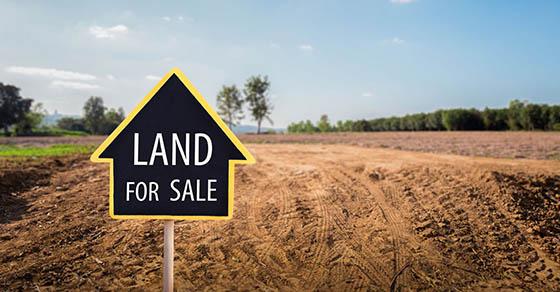
Let’s say you own highly appreciated land that’s now ripe for development. If you subdivide it, develop the resulting parcels and sell them off for a hefty profit, it could trigger a large tax bill.
In this scenario, the tax rules generally treat you as a real estate dealer. That means your entire profit — including the portion from pre-development appreciation in the value of the land — will be treated as high-taxed ordinary income subject to a federal rate of up to 37%. You may also owe the 3.8% net investment income tax (NIIT) for a combined federal rate of up to 40.8%. And you may owe state income tax too.
It would be better if you could arrange to pay lower long-term capital gain (LTCG) tax rates on at least part of the profit. The current maximum federal income tax rate on LTCGs is 20% or 23.8% if you owe the NIIT.
Potential tax-saving solution
Thankfully, there’s a strategy that allows favorable LTCG tax treatment for all pre-development appreciation in the land value. You must have held the land for more than one year for investment (as opposed to holding it as a real estate dealer).
The portion of your profit attributable to subsequent subdividing, development and marketing activities will still be considered high-taxed ordinary income, because you’ll be considered a real estate dealer for that part of the process.
But if you can manage to pay a 20% or 23.8% federal income tax rate on a big chunk of your profit (the pre-development appreciation part), that’s something to celebrate.
Three-step strategy
Here’s the three-step strategy that could result in paying a smaller tax bill on your real estate development profits.
1. Establish an S corporation
If you individually own the appreciated land, you can establish an S corporation owned solely by you to function as the developer. If you own the land via a partnership, or via an LLC treated as a partnership for federal tax purposes, you and the other partners (LLC members) can form the S corp and receive corporate stock in proportion to your percentage partnership (LLC) interests.
2. Sell the land to the S corp
Sell the appreciated land to the S corp for a price equal to the land’s pre-development fair market value. If necessary, you can arrange a sale that involves only a little cash and a big installment note the S corp owes you. The business will pay off the note with cash generated by selling off parcels after development. The sale to the S corp will trigger a LTCG eligible for the 20% or 23.8% rate as long as you held the land for investment and owned it for over one year.
3. Develop the property and sell it off
The S corp will subdivide and develop the property, market it and sell it off. The profit from these activities will be higher-taxed ordinary income passed through to you as an S corp shareholder. If the profit is big, you’ll probably pay the maximum 37% federal rate (or 40.8% percent with the NIIT. However, the average tax rate on your total profit will be much lower, because a big part will be lower-taxed LTCG from pre-development appreciation.
Favorable treatment
Thanks to the tax treatment created by this S corp developer strategy, you can lock in favorable treatment for the land’s pre-development appreciation. That’s a huge tax-saving advantage if the land has gone up in value. Consult with us if you have questions or want more information.
© 2023